
SEO · May 8, 2026
How local businesses rank on Google in Salt Lake City

By Zac Spencer · Owner, Crave Media
Type "plumber near me" into Google from a couch in Sugar House and you'll get a map with three businesses pinned to it, a stack of links underneath, and a few ads at the top. The three businesses on that map get the bulk of the calls. Everyone below the fold splits what's left.
That map is the whole game for a local business in Salt Lake City. Local SEO is the work of getting your business onto it, and then keeping it there while competitors try to push you off. It's not magic and it's not a one-time setup. It's a handful of things done consistently over months.
We've been doing this for Utah businesses for a decade, so let's walk through what actually moves the needle and what's a waste of your time.
What local SEO covers
People hear "SEO" and picture someone stuffing keywords into a website. Local SEO is a different animal. Google runs two somewhat separate systems: the regular blue-link results and the local map pack. The map pack is the box with the three businesses and the little map. It has its own ranking factors, and for most service businesses it matters far more than the blue links.
To rank in the map pack around Salt Lake City and Ogden, Google looks at three big things. How close you are to the person searching. How relevant your business is to what they typed. And how trustworthy you look, which mostly comes down to reviews and how often other sites mention you.
You can't do much about distance. A roofer in Ogden won't show up for someone searching from Provo, and that's fine. What you can control is relevance and trust, and that's where the work goes.
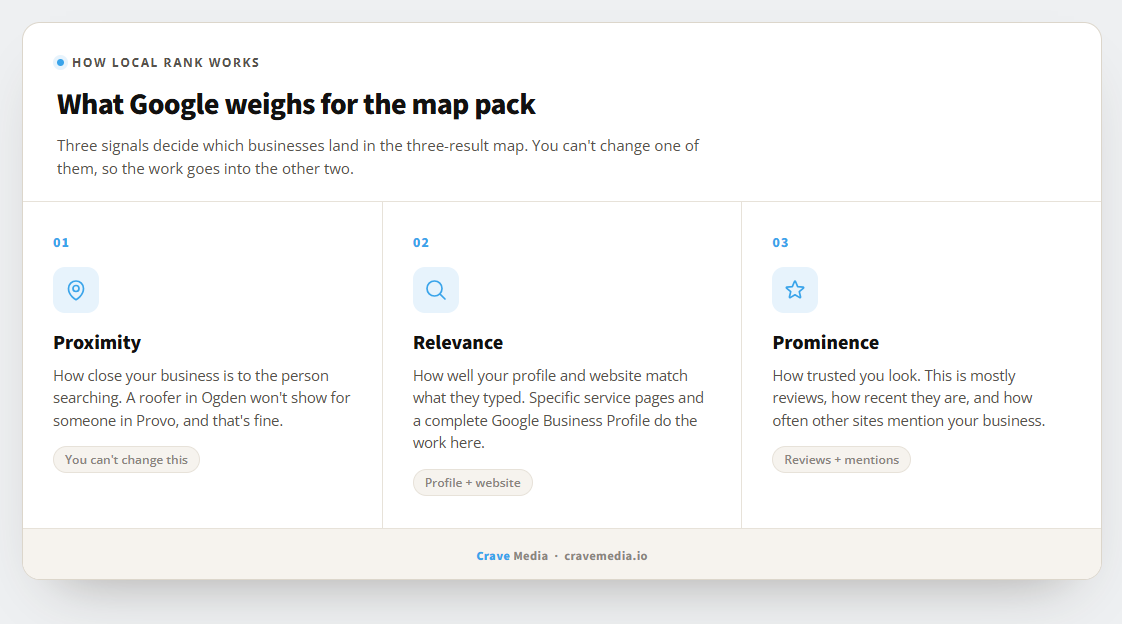
The three signals behind the map pack. You can't move your business closer to every searcher, so relevance and prominence are where the work pays off.
Your Google Business Profile is the foundation
Before anyone touches your website, fix your Google Business Profile. This is the free listing that feeds the map pack, and a surprising number of businesses leave it half-finished.
Pick the most specific category you can. "Carpet cleaning service" beats "cleaning service." Fill in every field Google offers: hours, service area, services, photos. Add real photos of your trucks, your team, your work. Google notices profiles that look active, and so do customers deciding whether to call you or the next listing down.
Then keep it current. A profile with the wrong holiday hours or a phone number from two offices ago tells Google the business might not be running anymore. Small stuff, but it adds up.
Reviews do more heavy lifting than anything else
If we had to point at one factor that separates the businesses in the map pack from the ones just below it, it's reviews. Not just the star rating. The number of reviews, how recent they are, and whether the owner replies.
A business with 140 reviews and a 4.8 average looks like a safer bet than one with 11 reviews, even if the 11 are all five stars. Google reads it the same way customers do.
The practical move is to ask every happy customer for a review, every time, and make it stupidly easy. Text them the direct link. Don't batch it up and ask 30 people at once in March. A steady trickle of fresh reviews signals an active, trusted business far better than a one-time pile.
And never buy reviews or have your cousin post fake ones. Google is good at spotting it, and a suspension wipes out months of progress.
The website still matters, just differently
Your site won't carry the map pack on its own, but it backs everything up. When Google decides how relevant you are for "water heater repair Ogden," it reads your website to figure out what you do and where.
That means you want real pages for your real services and the areas you cover. A plumbing company should have a page about water heaters, a page about drain cleaning, and so on, each written for a human who has that specific problem. Thin sites that cram every service onto one page give Google almost nothing to work with.
Location matters too. Mention the neighborhoods and cities you serve in a way that reads naturally, because nobody trusts a page that lists "Salt Lake City, Ogden, Layton, Sandy, Murray, West Valley" in a gray block at the bottom. Write like a person who works in those places.
The other half is speed and mobile. Most local searches happen on a phone, often when someone has an urgent problem. If your site takes six seconds to load, a chunk of those people are already calling someone else. A fast, well-built website is part of whether the SEO work pays off at all, not a nice-to-have you bolt on later.
How long this takes
Now the honest part most agencies skip. Local SEO is slow. You might see movement in the map pack within a few weeks if your profile was a mess and you cleaned it up. But real, durable ranking gains usually show up over three to six months, and the bigger your market the longer it takes.
The payoff is that it compounds. Paid ads stop the moment you stop paying. Rankings you've earned tend to hold, and the traffic keeps coming without a per-click cost. Over a couple of years that's the difference between renting your customers and owning the channel.
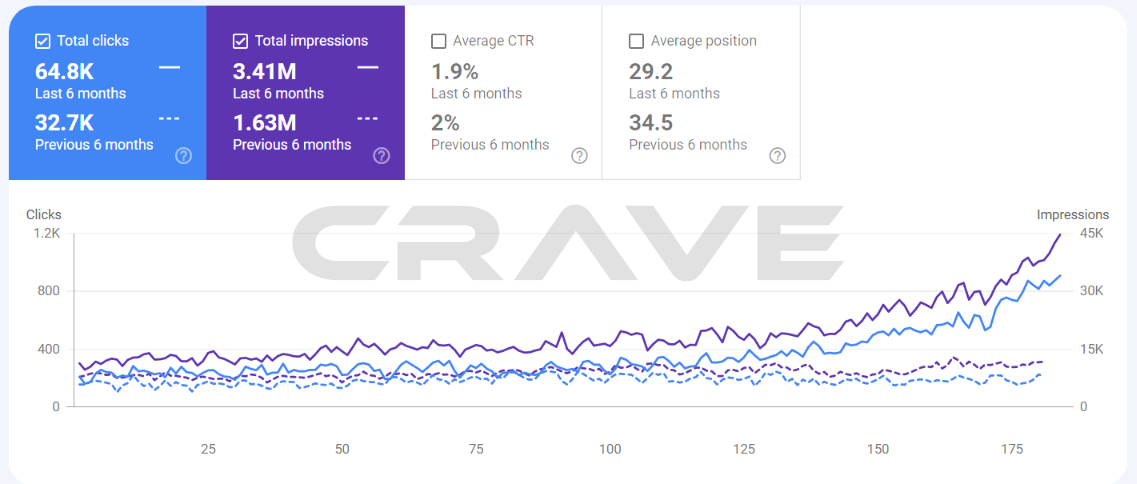
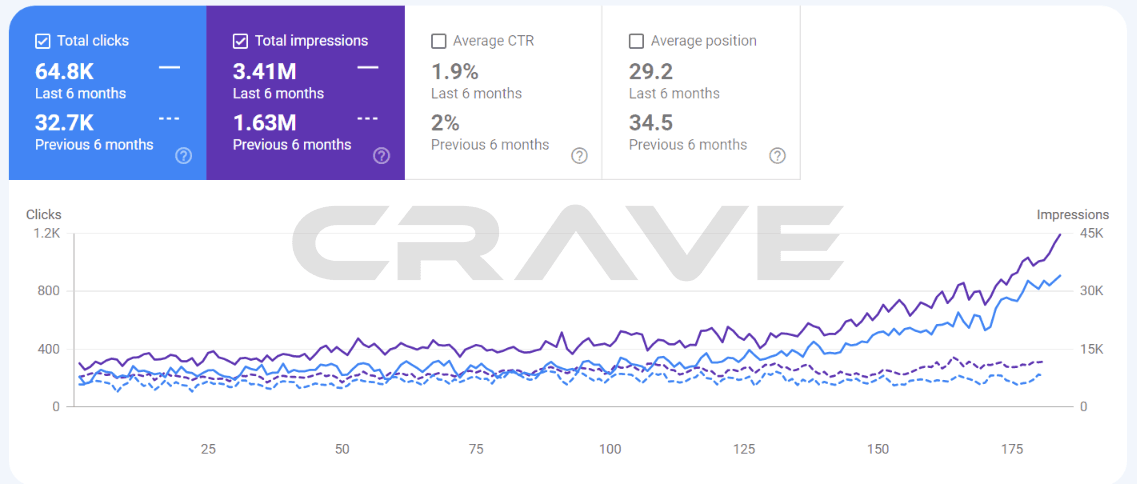
Six months of search data from one of our clients. 3.41M impressions and 64.8K clicks. That kind of visibility builds slowly, then holds.
What we'd do for you
When we take on local SEO for a Utah business, the first month is mostly cleanup and groundwork. We audit your Google Business Profile, fix whatever's wrong or missing, and check that your name, address, and phone number match everywhere they appear online. Inconsistent listings confuse Google more than people realize.
From there it's the steady work: building out service and location pages, setting up a system to bring in reviews consistently, getting your business mentioned on the directories and local sites that Google trusts, and tracking where you rank for the searches that bring real customers.
We report on it monthly, in plain language, so you can see whether the needle is moving instead of taking our word for it.
If you run a business in Salt Lake City or Ogden and you're not showing up in that map pack, that's leads going straight to your competitors. Get a free audit and we'll show you exactly where you stand and what it would take to climb.

About the author
Zac Spencer is an online marketing specialist and the owner of Crave Media, based in Salt Lake City, Utah. Since 2013 he has managed hundreds of Google Ads accounts across dozens of industries — with budgets from a few hundred dollars to $250K a month — and run SEO for local businesses, ecommerce shops, and international franchises.