
Strategy · September 15, 2026
Seasonal marketing: plan the slow season before it arrives

By Zac Spencer · Owner, Crave Media
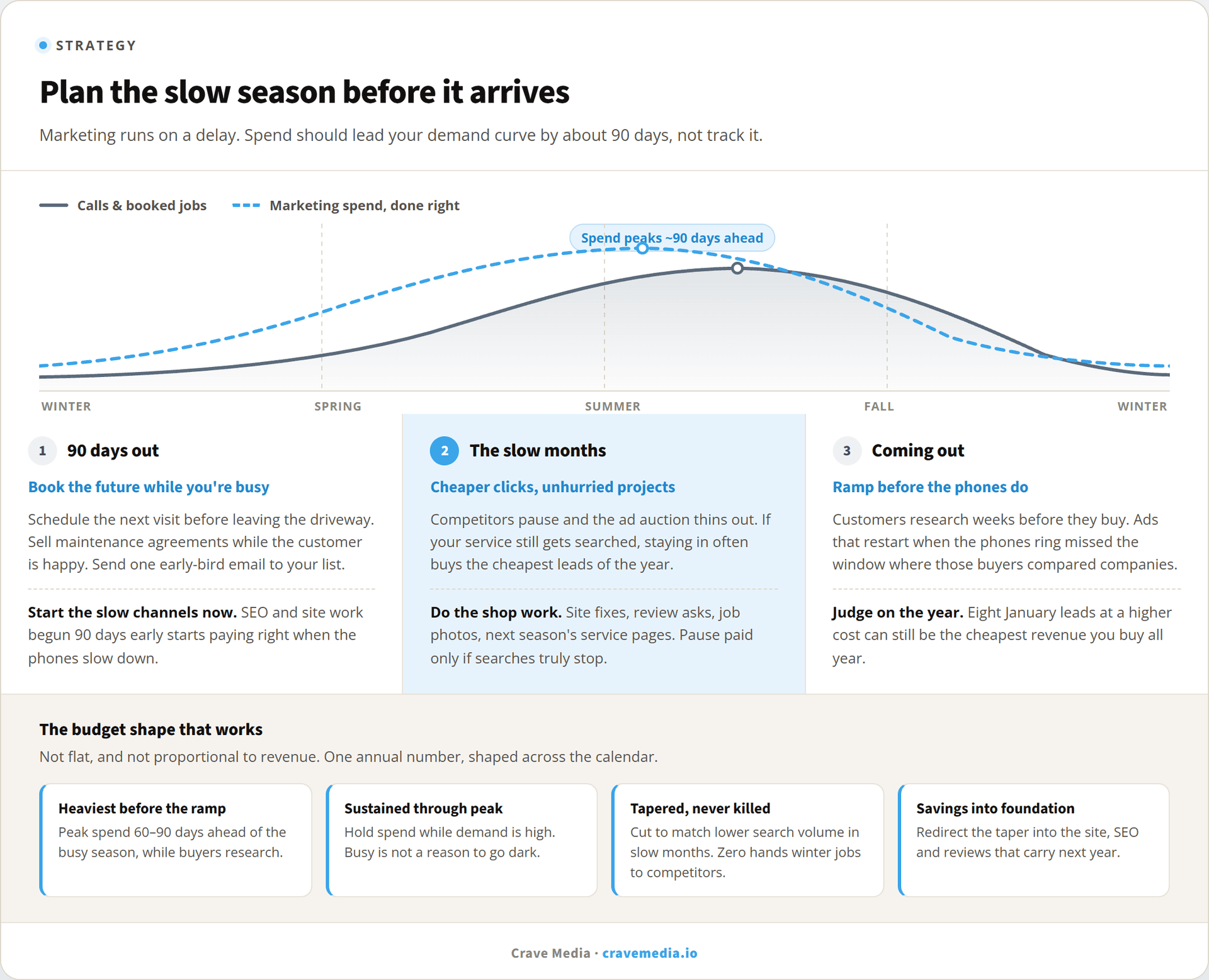
The most predictable problem in your business
If you run a lawn care company in Ogden, you know almost to the week when the phones go quiet. Same if you do AC work in Salt Lake, or exterior painting anywhere in Utah. The slow season isn't a surprise. It shows up on schedule every year, like a relative you don't enjoy.
And yet most service businesses treat it like a surprise. Seasonal marketing for a service business comes down to one idea: the work you do in September decides what January looks like. Most owners do the opposite. They ride the busy season flat out, too slammed to think about marketing, then the calls drop off, panic sets in, and they either slash every marketing dollar to protect cash or throw money at ads hoping to conjure demand that isn't there. Both moves cost more than they save.
The plan below covers three windows: the 90 days before the slow season, the slow months themselves, and the ramp back out.
Spending that follows the phones
Chart most owners' marketing spend against their call volume and you get the same line twice. Busy months, money goes out. Slow months, everything gets paused. It feels responsible. It's backwards.
Two reasons. First, customers start researching before they buy. The homeowner who books a furnace tune-up in October started noticing that weird smell in September. The one who signs a lawn contract in March was comparing companies in February. If your marketing only runs when the phones ring, you're invisible during the exact window when next season's customers are making up their minds.
Second, marketing channels run on a delay. SEO takes months to move; the rankings paying you today came from work done last quarter. Google Ads campaigns need weeks of conversion data before the bidding gets smart, and pausing a campaign for two months throws much of that learning away. Reviews accumulate slowly. Nothing in this business responds the same week you fund it.
Put those together and the rule writes itself: your marketing should lead your demand curve, not follow it. Spend ahead of the busy season, not during it. That's the whole strategy. The rest is execution.
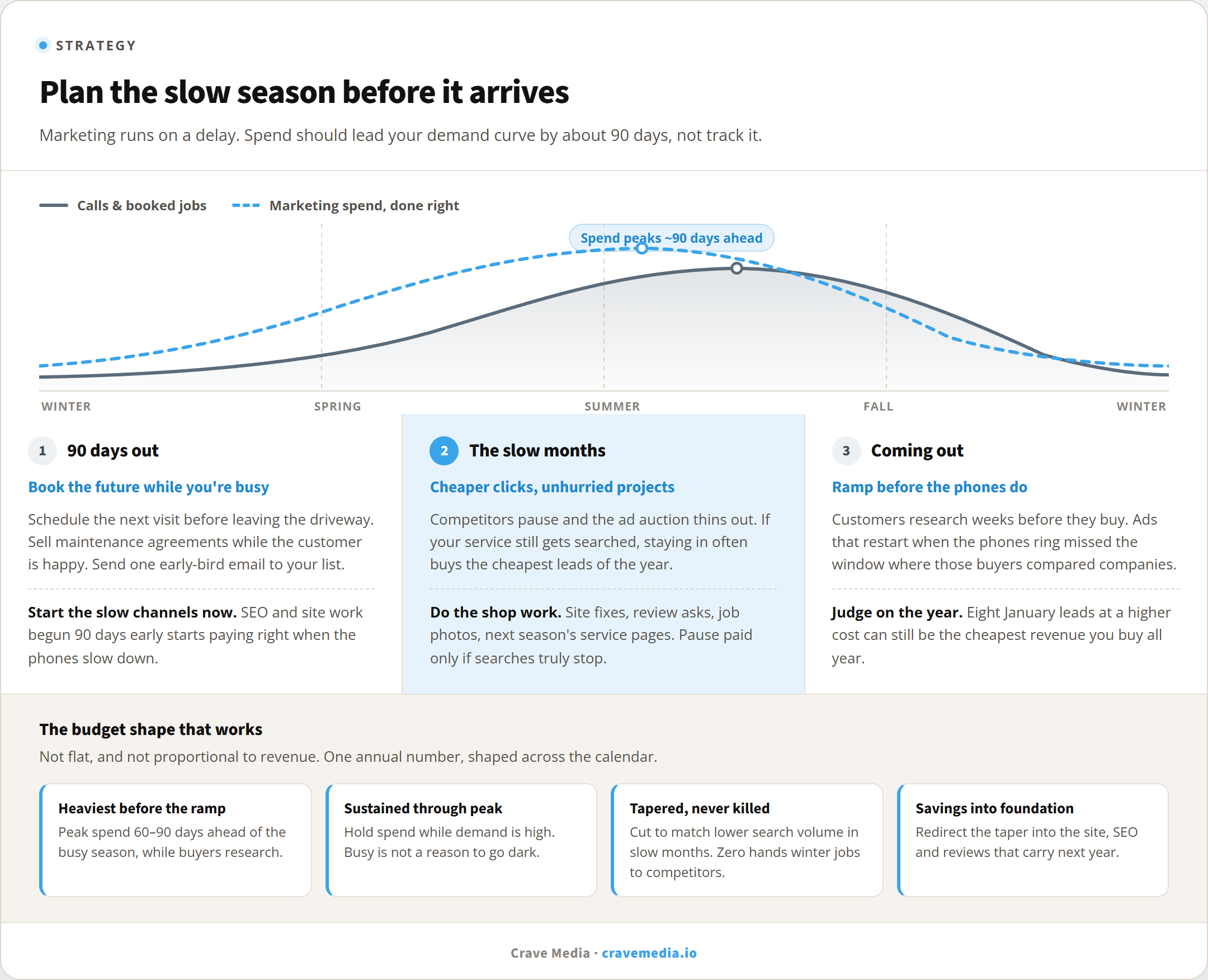
The one-line version of this post: spend ahead of demand, not on top of it. The three phases below fill in what to do inside each window.
Book the slow season while you're still busy
The best slow-season marketing happens while you're busy, which is exactly why it rarely happens. Three things deserve a spot on the calendar anyway.
Book forward work. Every job you finish in the busy season is a chance to schedule the next visit before you leave the driveway. Fall gutter cleaning sold at the summer roof job. A spring aeration booked at the fall cleanup. Maintenance agreements are the strongest version of this — they turn one-time customers into scheduled winter revenue, and selling them takes thirty seconds when you're already standing in the kitchen with a happy customer.
Email your customer list. Most service businesses have hundreds of past customers and no habit of talking to them. A September email offering an early-bird price on pre-winter service costs nothing and lands with people who already trust you. You don't need a newsletter program. One well-timed offer, twice a year, beats the drip campaign you'll never set up.
Get your ducks in a row on the channels with lag. If you've been meaning to fix your website or start SEO, starting 90 days before the slow season means the work begins paying out right when you need it. Starting the week the phones stop means paying for three months of foundation while cash is tightest. Same purchase, much worse timing.
What the quiet months are for
Once you're in the slow months, the goal shifts from filling this week's schedule to using the quiet well. Some of it is offense, some of it is shop work.
The offense: stay in the ad auction if your service still gets searched at all. When competitors pause their campaigns for the winter, the auction thins out and clicks get cheaper. Furnaces still die in January, and pipes still burst. The searches shrink, but the businesses competing for them shrink faster, and the companies still running often see their cost per lead drop below busy-season numbers. Cut your budget to match the smaller search volume, sure. Cutting to zero hands every winter emergency to whoever stayed in.
That said, if demand for your service genuinely goes to zero (nobody is booking lawn mowing in December), pause the ads without guilt. Paid traffic only works when someone's searching. The judgment call is search volume, not the calendar.
The shop work: slow months are when the projects that never survive the busy season finally get done. Website fixes. Service pages for next year's offerings. Asking your best customers for reviews. Photographing your work before the truck is buried in the next job. This is the foundation-level marketing that intent channels stand on, and it requires the one resource the busy season never gives you: attention.
A counter-seasonal offer belongs on this list too, if you have a real one. Plenty of lawn companies plow snow. Painters move interior in winter. But the offer has to be genuine — a service you can deliver well, not a logo slapped on work you've done twice. A bad winter side business damages the reviews your summer business depends on.
A seasonal marketing budget that doesn't guess
So what does the spend curve look like in practice? Not flat — a flat monthly budget overspends the dead months and underfunds the ramp. And not proportional to revenue either, since that's the follow-the-phones mistake with extra math.
The shape that works: heaviest spend starting about 60 to 90 days before your busy season, sustained through it, tapered (not killed) through the slow months, with the savings redirected into the lag channels and shop work. If you set your ad budget as one annual number and shape it across the calendar, rather than deciding month to month based on how busy you feel, the panic decisions mostly disappear.
Judge results on the year, not the month. A January that produces eight leads at a higher cost each might still be the cheapest revenue you buy all year, because those eight came with no competition for the follow-on work. Seasonal businesses that grade every month against July quit exactly the channels that carry them through winter.
One number worth writing down before the season turns: what a customer is worth to you across a year, not per ticket. The gutter cleaning that costs you $40 in ads to book looks expensive in November. It looks different when that house books the roof repair in April.
Pick one play and start
You don't need all of this by Friday. A full channel plan can come later. But the slow season on your calendar is closer than it looks, and every piece of this works better with lead time: the forward bookings, the customer email, the SEO foundation, the reshaped budget. Pick the one that fits how you sell, and set it up while the phones are still ringing.
If you'd rather have someone map your season for you, we'll do a free audit and tell you where your next dollar should go, including whether staying in the winter auction makes sense for your trade.

About the author
Zac Spencer is an online marketing specialist and the owner of Crave Media, based in Salt Lake City, Utah. Since 2013 he has managed hundreds of Google Ads accounts across dozens of industries — with budgets from a few hundred dollars to $250K a month — and run SEO for local businesses, ecommerce shops, and international franchises.